

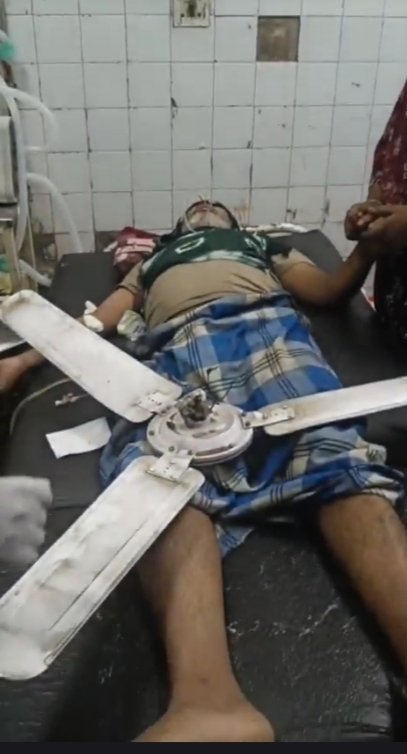
The Unfiltered Truth | New Delhi, July 19 : A tragic incident at Delhi’s Guru Teg Bahadur (GTB) Hospital has triggered widespread concern over patient safety after a 42-year-old man died hours after a ceiling fan allegedly detached from the ceiling and fell onto his bed in the hospital’s emergency ward. The incident has sparked demands for a high-level inquiry from the deceased’s family, who have accused the hospital administration of negligence and poor maintenance. At the same time, hospital authorities have denied that the falling fan caused the patient’s death, maintaining that he succumbed to serious pre-existing medical conditions. The incident has reignited debate over the condition of public healthcare infrastructure and the need for regular safety inspections in government hospitals.
The deceased has been identified as Mohammad Akbar, who was admitted to the emergency ward after reportedly suffering from multiple serious health complications. According to hospital records, he was undergoing treatment for uncontrolled hypertension, meningoencephalitis (or encephalopathy), aspiration pneumonia, and respiratory failure. Family members and eyewitnesses alleged that while Akbar was lying on his hospital bed in Emergency Ward 27 on the night of July 18, the ceiling fan suddenly came loose and fell directly onto him, reportedly striking his abdomen. The incident created panic inside the ward as attendants and medical staff rushed to assist the injured patient. Although he was immediately attended to by doctors, he died a few hours later.
The victim’s relatives have claimed that the hospital failed to maintain basic safety standards, alleging that the accident was entirely preventable. They demanded strict action against those responsible and called for an independent investigation into the circumstances surrounding the incident. Family members also alleged that several air-conditioning units in the ward were not functioning properly, forcing patients to rely on ceiling fans despite the poor condition of the hospital’s infrastructure. According to them, the tragic incident highlights serious lapses in maintenance and reflects the urgent need for better oversight in public healthcare facilities.
Following the incident, GTB Hospital issued an official statement denying that the ceiling fan was responsible for Mohammad Akbar’s death. The hospital administration stated that the patient had been admitted in an unconscious and critical condition with multiple life-threatening illnesses. According to the hospital, doctors had already assessed his chances of recovery as extremely poor because of his severe medical complications. Officials further stated that although the fan’s shaft unexpectedly fractured and caused the fan to fall, there was no evidence to suggest that the impact led to the patient’s death. The administration maintained that the cause of death was the progression of his underlying illnesses rather than injuries sustained during the incident.
Hospital authorities also confirmed that an internal inquiry has been initiated to determine how the ceiling fan became detached. Technical teams reportedly inspected the ward immediately after the incident, removed the damaged fan, and replaced it with a new one. Officials said they would review the maintenance status of electrical fixtures and other equipment across the hospital to prevent similar occurrences in the future. They assured that patient safety remains a priority and that appropriate action would be taken if any negligence is established during the investigation.
The incident has attracted significant public attention, with many expressing concern over the state of infrastructure in government hospitals. Healthcare experts have pointed out that routine maintenance and periodic safety audits are essential in hospitals where thousands of patients receive treatment every day. They argue that incidents involving structural failures, even if they do not directly cause fatalities, undermine public confidence in healthcare institutions and expose patients to unnecessary risks.
As investigations continue, the exact cause of Mohammad Akbar’s death remains disputed. While his family believes that the falling ceiling fan contributed to the fatal outcome, the hospital insists that his death resulted solely from his pre-existing medical condition. Authorities are expected to examine medical records, witness statements, and technical findings before arriving at a final conclusion. Until then, the incident continues to raise important questions about infrastructure maintenance, accountability, and patient safety in one of Delhi’s largest government-run hospitals.